
Hello there! In this article, we will discuss the importance of proper lifting techniques to prevent disc protrusion. By learning the correct way to lift heavy objects, you can protect your back and reduce the risk of injuring your spinal discs. Let’s dive into some helpful tips and tricks to keep your back healthy and strong! Have you ever experienced back pain after lifting something heavy? You might have unknowingly put stress on your spinal discs, leading to a condition called disc protrusion. In this article, we will guide you on how to properly lift to prevent disc protrusion and keep your back healthy.
Understanding Disc Protrusion
Disc protrusion, also known as a herniated disc, occurs when the soft inner part of a spinal disc pushes through the outer layer and irritates nearby nerves. This condition can cause pain, numbness, and weakness in the affected area, making everyday activities difficult. It commonly happens in the lower back (lumbar spine) and neck (cervical spine) regions.
How Does Lifting Incorrectly Cause Disc Protrusion?
When you lift a heavy object incorrectly, you put excessive strain on your spine. This can lead to the discs between your vertebrae being compressed unevenly, causing them to bulge or herniate. Common mistakes include bending at the waist, twisting while lifting, and using improper lifting techniques.
To prevent disc protrusion, it’s important to understand how to lift correctly and protect your spine from unnecessary strain.
Proper Lifting Techniques
By following these proper lifting techniques, you can reduce the risk of disc protrusion and protect your back from injury:
Maintain a Neutral Spine Position
When lifting objects, always keep your spine in a neutral position to distribute the weight evenly and minimize stress on your discs. Avoid rounding or arching your back, as this can strain the muscles and ligaments supporting your spine.
Engage Your Core Muscles
Before lifting, tighten your core muscles to provide additional support for your spine. This helps stabilize your torso and pelvis, reducing the risk of disc protrusion. Imagine bracing your abdomen as if you were preparing to be punched in the stomach.
Bend at the Hips and Knees
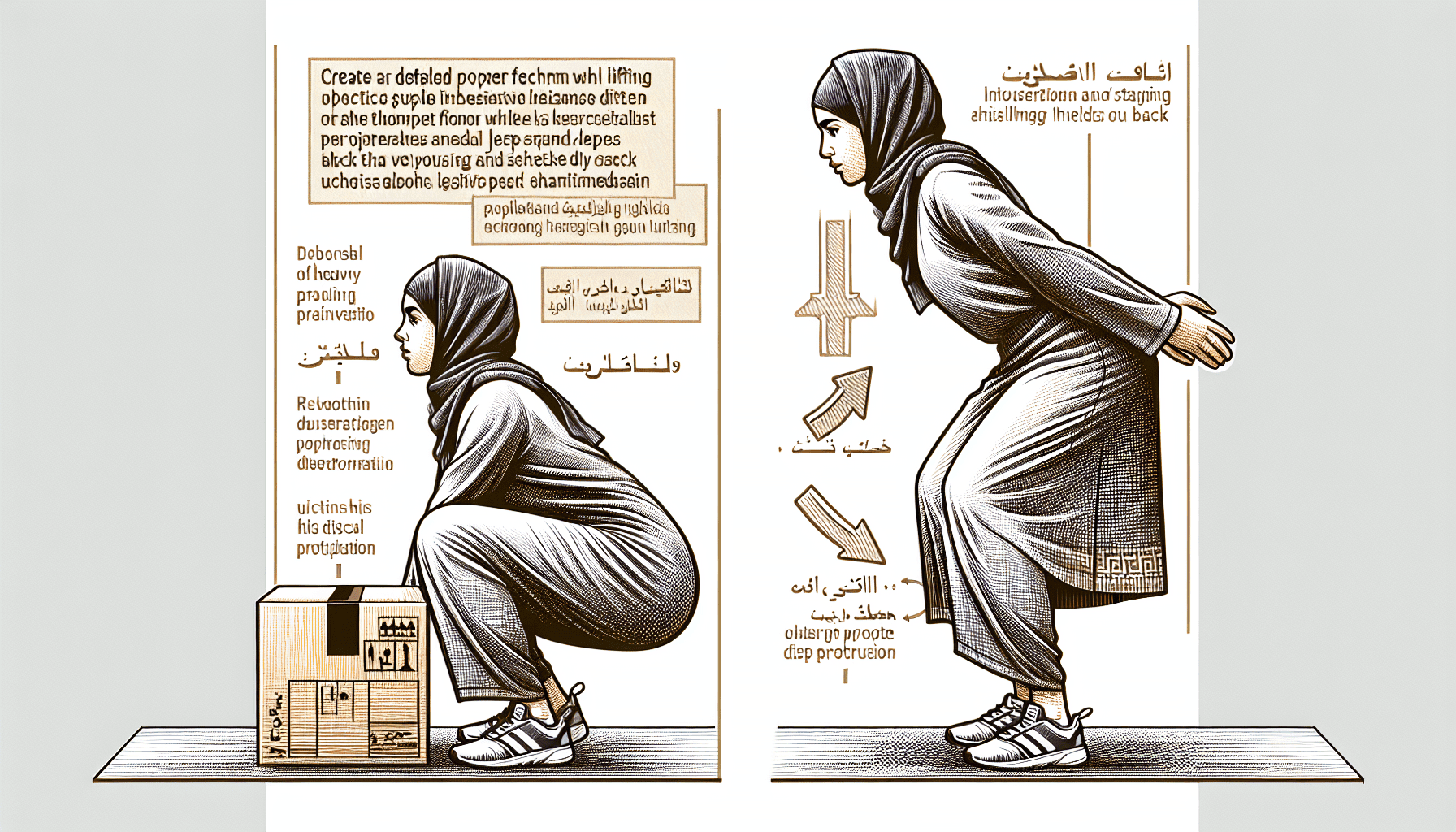
Instead of bending at the waist, bend at your hips and knees to squat down and lift objects closer to your body. This reduces the amount of pressure on your spine and decreases the likelihood of disc protrusion.
Use Proper Lifting Form
When lifting, maintain a wide stance with your feet shoulder-width apart for stability. Grip the object firmly with both hands and lift with your legs, not your back. Keep the object close to your body as you stand up to minimize strain on your spine.
Preventing Disc Protrusion in Different Lifting Situations
Whether you’re at home, work, or the gym, it’s essential to apply proper lifting techniques in various situations to prevent disc protrusion. Here are some tips for specific scenarios:
Lifting at Home
When lifting heavy objects at home, such as furniture or boxes, make sure to ask for help if the item is too heavy to lift alone. Use moving equipment like dollies or sliders to reduce the strain on your back. Additionally, clear pathways and remove obstacles to prevent tripping or falling while carrying objects.
Lifting at Work
In a work environment that involves frequent lifting, such as construction or warehouse jobs, practice safe lifting techniques to protect your back. Use mechanical aids like forklifts or hand trucks whenever possible to lift heavy loads. If manual lifting is required, take regular breaks to rest your back and avoid overexertion.
Lifting at the Gym
When lifting weights at the gym, ensure that you’re using proper form and technique to prevent disc protrusion. Start with lighter weights to warm up your muscles before progressing to heavier lifts. If you’re unsure about the correct lifting technique, consider working with a personal trainer to avoid injury.
Exercises to Strengthen Your Core and Back Muscles
In addition to proper lifting techniques, strengthening your core and back muscles can help prevent disc protrusion and improve overall spinal health. Here are some exercises you can incorporate into your workout routine:
Plank
The plank exercise targets your core muscles, including your abdominals, obliques, and lower back. To perform a plank, start in a push-up position with your elbows bent at 90 degrees and your body in a straight line. Hold this position for 30 seconds to 1 minute, engaging your core throughout.
Bird Dog
The bird dog exercise strengthens your lower back muscles and improves stability in your spine. Begin on your hands and knees, with your wrists aligned under your shoulders and your knees under your hips. Extend one arm and the opposite leg simultaneously, keeping your back straight. Hold for a few seconds before switching sides.
Bridge
The bridge exercise targets your glutes, hamstrings, and lower back muscles to improve spinal alignment and stability. Lie on your back with your knees bent and feet flat on the floor. Lift your hips towards the ceiling, squeezing your glutes at the top. Hold for a few seconds before lowering back down.
Superman
The superman exercise engages your back muscles, including your erector spinae, to promote proper posture and spinal alignment. Lie face down with your arms extended in front of you. Lift your arms and legs off the floor simultaneously, engaging your back muscles. Hold for a few seconds before lowering back down.
Importance of Stretching and Mobility Exercises
Incorporating stretching and mobility exercises into your daily routine can improve flexibility, reduce muscle tension, and prevent disc protrusion. By maintaining optimal range of motion in your joints, you can decrease the risk of injury and promote spinal health. Here are some stretches and mobility exercises to consider:
Cat-Cow Stretch
The cat-cow stretch targets your spine, shoulders, and neck to improve flexibility and mobility. Start on your hands and knees, with your wrists under your shoulders and knees under your hips. Inhale as you arch your back and look up towards the ceiling (cow pose), then exhale as you round your back and tuck your chin to your chest (cat pose). Repeat this movement for several breaths.
Child’s Pose
The child’s pose stretch elongates your spine and stretches your back, hips, and shoulders. Begin on your hands and knees, then sit back on your heels with your arms extended in front of you. Lower your forehead to the floor and relax into the stretch, feeling a gentle release in your lower back. Hold this position for 30 seconds to 1 minute.
Thoracic Rotation
The thoracic rotation exercise targets your upper back and shoulders to improve spinal mobility and reduce stiffness. Lie on your side with your knees bent and arms extended in front of you. Rotate your upper body towards the ceiling, reaching your top arm overhead. Hold for a few seconds before returning to the starting position. Repeat on both sides.
Hip Flexor Stretch
The hip flexor stretch relieves tension in your hip flexor muscles, which can contribute to back pain and poor posture. Kneel on one knee with the opposite foot planted in front of you. Lean forward slightly, feeling a stretch in the front of your hip and thigh. Hold this position for 30 seconds before switching sides.
Neck Stretch
The neck stretch targets the muscles in your neck and shoulders to alleviate tension and improve range of motion. Sit or stand tall with your shoulders relaxed. Tilt your head to one side, bringing your ear towards your shoulder until you feel a stretch along the opposite side of your neck. Hold for 15-30 seconds, then switch sides.
Conclusion
By understanding how disc protrusion occurs and implementing proper lifting techniques, you can protect your spine and reduce the risk of injury. Remember to lift with your legs, keep your spine neutral, and engage your core muscles to support your back during lifting. Additionally, incorporate exercises to strengthen your core and back muscles, as well as stretching and mobility exercises to maintain flexibility and prevent tension. Prioritize your spinal health by practicing safe lifting habits and caring for your back on a daily basis. Your future self will thank you for taking proactive steps to prevent disc protrusion and maintain a healthy, resilient spine.